
WELCOME BONUS 300%
UP TO €2000 + 100
FREE SPINS
UP TO €2000 + 100
FREE SPINS
Home → Blackjack
Blackjack at Fugu Casino: Variants, Rules and Payouts
Side Bet Every Round: Budget Lasts 30 Rounds
The Blackjack Auszahlung variant, featuring a 6:5 payout instead of 3:2 across 6 decks, carries a house edge of 1.85%. This means for every 100 EUR wagered, the casino expects to retain 1.85 EUR on average. A player opting for this table with a 10 EUR bet would receive 12 EUR back on a winning hand, rather than 15 EUR.
When participating in Infinite Blackjack, which allows unlimited players and accepts wagers from 1 EUR up to 5,000 EUR per hand, side bets are available. These include Any Pair, 21+3, Hot 3, and Bust It. The base RTP for Infinite Blackjack stands at 99.47%, but side bets typically carry a higher house edge, impacting the overall return.
Considering a budget of 300 EUR and a 10 EUR bet per round at a table with a 1.85% house edge, the budget would theoretically last for approximately 30 rounds. This calculation is based on the expected loss per round and does not account for variance or the impact of side bets which can significantly alter the outcome.
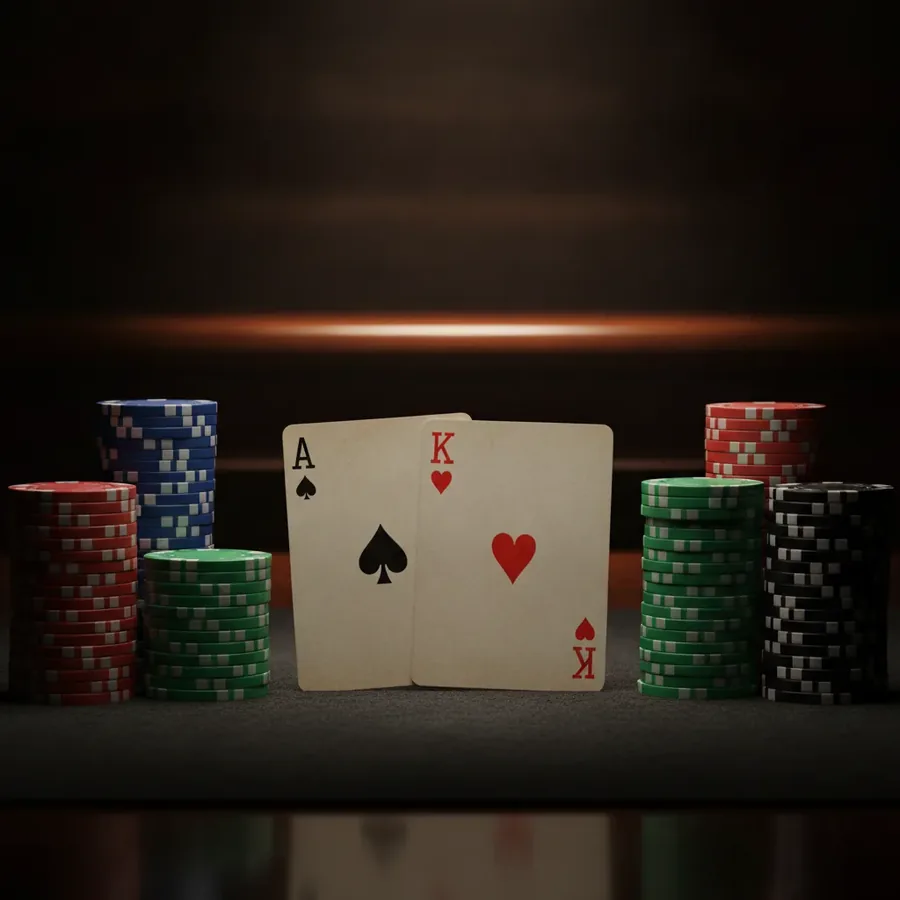
Early Surrender is removed from many tables
The Blackjack Surrender rule, specifically Late Surrender, allows a player to forfeit half their bet after the dealer checks for blackjack. This modification improves the RTP by approximately 0.08 percentage points. However, the more valuable Early Surrender, which can improve RTP by up to 0.6 percentage points, is rarely found on tables.
In a game of Blackjack Liberal Vegas Strip with RTP 99.72% and a house edge of 0.28%, the inclusion of Late Surrender contributes to its favorable player return. This specific variant offers a highly desirable rule combination including S17, DAS, Resplit, and Late Surrender, making it attractive for players who strategically utilize these options.
For high rollers betting 2,500 EUR on Lightning Blackjack, the absence of Early Surrender on certain tables represents a missed opportunity to mitigate losses in unfavorable situations. While Lightning Blackjack offers unlimited players and multipliers up to 25x, the foundational rules like surrender significantly impact long-term expected value for substantial wagers.
Splitting tens costs expected value: better stand
Splitting tens in blackjack, a common strategy considered by some players, actually decreases the expected value of a hand. For instance, a hand totaling 20 is a strong position, and splitting it into two separate hands significantly reduces the player's advantage, especially when compared to standing on 20.
Blackjack tables offering standard rules with 3:2 payouts and a RTP of 99.54% are generally favorable. However, if a player chooses to split tens in such a game, they are effectively introducing a negative expectation to a potentially strong hand. The optimal strategy dictates standing on hard 20 to preserve that advantage.
For players engaging with live dealer options such as Infinite Blackjack or Lightning Blackjack, where stakes can reach up to 5,000 EUR and 2,500 EUR respectively, adhering to fundamental strategy is paramount. Splitting tens on such high stakes, rather than standing on a strong 20, can lead to substantial, unnecessary losses over time.
No Double Down on three cards
The rule prohibiting doubling down after receiving three cards significantly impacts player strategy, particularly in games with a higher house edge. Standard blackjack rules usually allow doubling down on any two cards, but this restriction limits options for improving a hand, thereby reducing potential returns.
A Blackjack 6 Decks variant with RTP 98.15% and a house edge of 1.85% is less favorable than tables with single-deck rules. If such a game also restricts doubling down to only the first two cards, it further disadvantages the player, especially when compared to more liberal Vegas Strip blackjack with RTP 99.72%.
For high rollers participating in live blackjack, such as Lightning Blackjack with wagers up to 2,500 EUR, the absence of the double down option on three cards is a critical constraint. This rule modification means players cannot capitalize on advantageous situations where their initial two cards might be improved with an additional card, directly impacting their winning potential.
Live stream with three cameras and OCR
Live dealer blackjack games, such as Infinite Blackjack by Evolution, offer an immersive experience with unlimited player seats and bets up to 5,000 EUR. These streams often utilize multiple camera angles to provide a comprehensive view of the gameplay and the dealer's actions.
The implementation of Optical Character Recognition (OCR) technology in live blackjack streams ensures accurate display of card values and game states. This technology is crucial for games like Lightning Blackjack, where lightning multipliers up to 25x are applied, ensuring fair and transparent payouts for all players.
For players betting up to 1,000 EUR on Blackjack Party, the live stream's multiple camera perspectives enhance engagement. This setup, combined with OCR, ensures that every hand dealt and every side bet placed is accurately recorded, providing a secure and verifiable gaming environment for all participants.
Blackjack variants at a glance
| Variant | Payout | House edge | Rule | Bet range |
|---|---|---|---|---|
| Blackjack Insurance / Versicherung (6–8 Decks) | 92.53% | 7.47% | Separate Nebenwette bis 50% der Hauptwette, wenn der Dealer ein Ass hat. Basisstrategie schreibt IMMER Ablehnung vor (außer Karten zählen bei True Count ≥ +3). Bei einem Deck Vorteil ≈ 5.88% | Insurance 2:1 |
| Blackjack Split / Double / H17 – Regel-Effekte | n.a. (Regel-Modifikatoren) | H17 +0.22 Prozentpunkte; RSA −0.08 Prozentpunkte; DAS −0.14 Prozentpunkte | Dealer Hits Soft 17 verschlechtert RTP um 0.22 Prozentpunkte; Resplit Aces verbessert um 0.08 Prozentpunkte; Double After Split verbessert um ca. 0.14 Prozentpunkte; 6 Decks statt 8 – ca. 0.02 Prozentpunkte. | Double – Einsatz ×2 mit einer Karte; Split – bis 4 Hände; Ass-Split meist mit einer Karte. |
| Blackjack Liberal Vegas Strip (liberale Regeln, 3:2) | 99.72% | 0.28% | Günstigste Regelkombination: S17 + DAS + Resplit + Late Surrender. Standardabweichung 1,15 | Blackjack 3:2, Gewinn 1:1 |
| Blackjack Auszahlung 6:5 statt 3:2 (6 Decks) | 98.15% | 1.85% | Ersatz von 3:2 durch 6:5 fügt exakt +1.39 Prozentpunkte zum Vorteil des Casinos hinzu – stärker als jede andere Regeländerung. Bei $10 Einsatz zahlt Blackjack $12 statt $15. | Blackjack 6:5, Gewinn 1:1 |
| Blackjack 6 Decks, S17, DAS, DOA, Auszahlung 3:2, Basisstrategie | 99.54% | 0.46% | Dealer steht auf Soft 17; Verdopplung auf jeder Zweierkarte; Verdopplung nach Split erlaubt; keine Aufgabe. Basisstrategie ist für diesen Wert zwingend | Blackjack 3:2, normaler Gewinn 1:1, Insurance 2:1 |
| Blackjack Surrender (Late Surrender) – Regel-Effekt | n.a. (Regel-Modifikator) | −0.08 Prozentpunkte | Spieler gibt Hand nach Dealer-Blackjack-Prüfung auf, verliert die Hälfte des Einsatzes. Verbessert RTP um ca. 0.08 Prozentpunkte. Early Surrender ist wesentlich wertvoller (bis −0.6 Prozentpunkte), aber extrem selten. | Rückzahlung 50% des Einsatzes |
Bust at 22: Stake Lost Immediately
The Blackjack Liberal Vegas Strip variant, with a house edge of 0.28%, includes the rule where a bust at 22 results in an immediate loss of the stake. This rule is applied even if the dealer subsequently busts. For a player betting 100 EUR, this means the entire stake is forfeited before any other outcome is determined.
This specific rule, as part of a favorable combination including S17, DAS, and Resplit, significantly impacts the player's strategy. While the RTP for this variant is a high 99.72%, the potential for an immediate loss due to a bust at 22 can alter the perceived risk for high rollers. The standard deviation for this table is 1.15.
Compared to other Blackjack variants, this immediate loss rule for busting at 22 can lead to quicker depletion of funds for players who frequently hit or stand on soft totals that are close to 22. For a high roller betting 1,000 EUR, a single bust at 22 means an immediate loss of that substantial amount, irrespective of dealer actions.
Which table limits suit 20 EUR balance?
For players with a 20 EUR balance, table limits are crucial for maintaining gameplay duration. Games like Infinite Blackjack, which accepts stakes from 1 EUR, are accessible. With a 20 EUR balance, a player could theoretically place twenty 1 EUR bets at Infinite Blackjack before running out of funds.
The Lightning Blackjack variant also offers a minimum stake of 1 EUR, making it suitable for smaller balances. A 20 EUR balance would allow for twenty hands at this table before depletion. This contrasts with higher minimum bets that would severely limit playtime for such a balance.
While some live tables like Blackjack Party have a minimum bet of 1.00 EUR, the overall betting range for players with a 20 EUR balance is restricted to the lowest available stakes. Higher table limits, such as those reaching 5,000 EUR at Infinite Blackjack, are clearly not suitable for this balance.
Chose Wrong Table for 5 EUR Bankroll
Selecting a table with a higher minimum bet than a 5 EUR bankroll can support is a common oversight. For instance, if a player chooses a table with a minimum bet of 10 EUR, their 5 EUR bankroll is insufficient for even a single hand. This immediately ends any potential play at that specific table.
Games like Blackjack Split / Double / H17 have rule modifiers that can influence the house edge, but the minimum bet is the primary concern for a 5 EUR bankroll. If the minimum bet is 5 EUR or higher, a player with only 5 EUR can only afford one hand. A 6:5 payout table would reduce potential winnings.
Even at tables with a 1 EUR minimum bet, a 5 EUR bankroll allows for only five hands. If a player opts for a game with a 2 EUR minimum, their bankroll is reduced to just two hands. This highlights the critical need to check table limits before committing funds, especially for smaller bankrolls.
Why Loss Progression Quickly Reaches Table Limit
For high rollers, a rapid loss progression can quickly deplete even substantial bankrolls and hit table limits. For example, a player with a 2,000 EUR balance on Infinite Blackjack, which has a maximum bet of 5,000 EUR, could theoretically lose their entire balance in a few unsuccessful hands if betting aggressively.
Consider a player betting 500 EUR per hand. If they experience a string of losses, perhaps five consecutive hands, their initial balance of 2,500 EUR would be wiped out. This progression to zero balance would occur rapidly, preventing further play at any table, especially those with higher limits.
The 300% welcome bonus up to €2,000, which requires significant wagering (e.g., 300% bonus x 40 wagering = 120,000 EUR turnover), can also be affected. Rapid losses before meeting wagering requirements mean the bonus funds become unavailable, and the player's own capital is depleted, potentially before reaching the table limit on losses.
Continuous Shuffling Machine shuffles after each round
The use of a Continuous Shuffling Machine (CSM) in Blackjack variants means the shoe is shuffled after every single hand. This eliminates card counting opportunities, as the deck composition is reset constantly. For a player at Blackjack 6 Decks, this means the deck is re-shuffled immediately after each round concludes.
For high rollers, the implication of a CSM is a consistent house edge, around 0.46% for Blackjack 6 Decks with a 3:2 payout. The absence of predictable card sequences removes any advantage derived from tracking cards, ensuring a statistically stable outcome for the casino on each hand played.
While CSMs offer a consistent playing field without the possibility of card counting, they are standard in many live dealer environments. Variants like Infinite Blackjack utilize this technology. This ensures that for every 100 EUR wagered, the theoretical RTP of 99.47% for Infinite Blackjack remains constant across all hands.
What a Natural Blackjack Practically Pays Out
Blackjack Liberal Vegas Strip, a variant with liberal rules, offers a 3:2 payout for a natural blackjack. This means a bet of €100 would return €250, including the original stake. The theoretical RTP for this specific variant is 99.72%, with a house edge of 0.28%.
In contrast, a blackjack payout of 6:5, as seen in a six-deck game, significantly reduces the player's return. For the same €100 bet, a 6:5 payout would only return €220, a difference of €30 compared to the 3:2 payout. This rule change alone increases the casino's advantage by 1.39 percentage points.
The Blackjack Ein Deck variant, adhering to classic rules with a 3:2 payout, presents an even more favourable RTP of 99.85%, resulting in a house edge of just 0.15%. This highlights how fewer decks and a 3:2 payout structure are substantially more advantageous for high rollers seeking to maximize their potential returns.
Blackjack Contributes Only 10 Percent to Wagering
When engaging with welcome bonuses, high rollers should be aware that most table games, including blackjack variants, contribute only 10 percent towards wagering requirements. This means for every €100 wagered on blackjack, only €10 counts towards clearing the bonus. This significantly extends the time and amount needed to make bonus funds withdrawable.
For example, a €2,000 welcome bonus with a 40x wagering requirement would typically demand €80,000 in total wagers. If blackjack only contributes 10%, a high roller would need to wager €800,000 on blackjack games to fulfill this requirement. This is a substantial amount, making it challenging for blackjack players to leverage the full bonus value.
In contrast, slots contribute 100% to wagering requirements. This means a €100 bet on slots counts as €100 towards the €80,000 target. This disparity in contribution rates means high rollers focusing on blackjack may find it more practical to prioritize slots for bonus wagering, or accept that a smaller portion of the bonus will be realized.
Split, Double Down, and Surrender in Numbers
The rules surrounding splitting, doubling down, and surrendering can significantly impact a high roller's overall return. For instance, the Double After Split (DAS) rule, which allows players to double down after splitting a pair, improves the RTP by approximately 0.14 percentage points. This is a valuable rule for strategic play.
Conversely, the Blackjack Surrender rule, specifically Late Surrender where a player forfeits half their bet after the dealer checks for blackjack, can improve the RTP by around 0.08 percentage points. While beneficial, it is less impactful than other strategic options or favourable payout structures.
The ability to hit after splitting (RSA) offers a minor RTP improvement of about 0.08 percentage points, but it is crucial to note that dealer hitting on Soft 17 (H17) worsens the RTP by 0.22 percentage points. These rule variations, though seemingly small, accumulate over high-volume play.
Bonus Lost Due to 10 Percent Contribution
A high roller accepting the 300% welcome bonus up to €2,000, meaning a potential €6,000 in bonus funds on a €2,000 deposit, faces a significant hurdle due to the 10% wagering contribution from blackjack. This 10% rule effectively limits the usable bonus value for blackjack enthusiasts to 10% of the total offer.
To illustrate, if a high roller aims to clear the full €6,000 bonus, and only blackjack is played, the wagering requirement would necessitate an astronomical amount. A 40x wagering requirement on €6,000 would typically be €240,000. However, with a 10% contribution, this translates to €2,400,000 in blackjack wagers.
This disproportionate wagering burden means that a substantial portion of the €2,000 welcome bonus, and any subsequent winnings derived from it, may become practically inaccessible for players who primarily engage with blackjack. The bonus terms, when applied to table games, significantly diminish the perceived value for dedicated high rollers.
Insurance Pays 2:1 Yet Still Costs Money
Blackjack insurance, a side bet offered when the dealer shows an Ace, pays at 2:1. This bet allows a player to wager up to 50% of their main bet. For example, on a €100 bet, a €50 insurance bet would pay €100 if the dealer has blackjack.
However, the RTP for insurance, particularly in six to eight-deck games, is a mere 92.53%, resulting in a substantial house advantage of 7.47%. Basic strategy dictates always declining insurance unless card counting indicates a true count of +3 or higher, as it is a losing proposition long-term.
The cost of consistently taking insurance, even with its 2:1 payout, is demonstrably high for the player. Over time, the 7.47% house edge on this side bet will erode a significant portion of potential winnings, making it an unfavorable option for disciplined high rollers.
Contact
Live - online chat
Banking









Providers












Fugu Casino 2026